
Storm & Insurance
Florida’s 25% Roof Replacement Rule: What Jacksonville Homeowners Need to Know
By Cache Roofing Team · Published
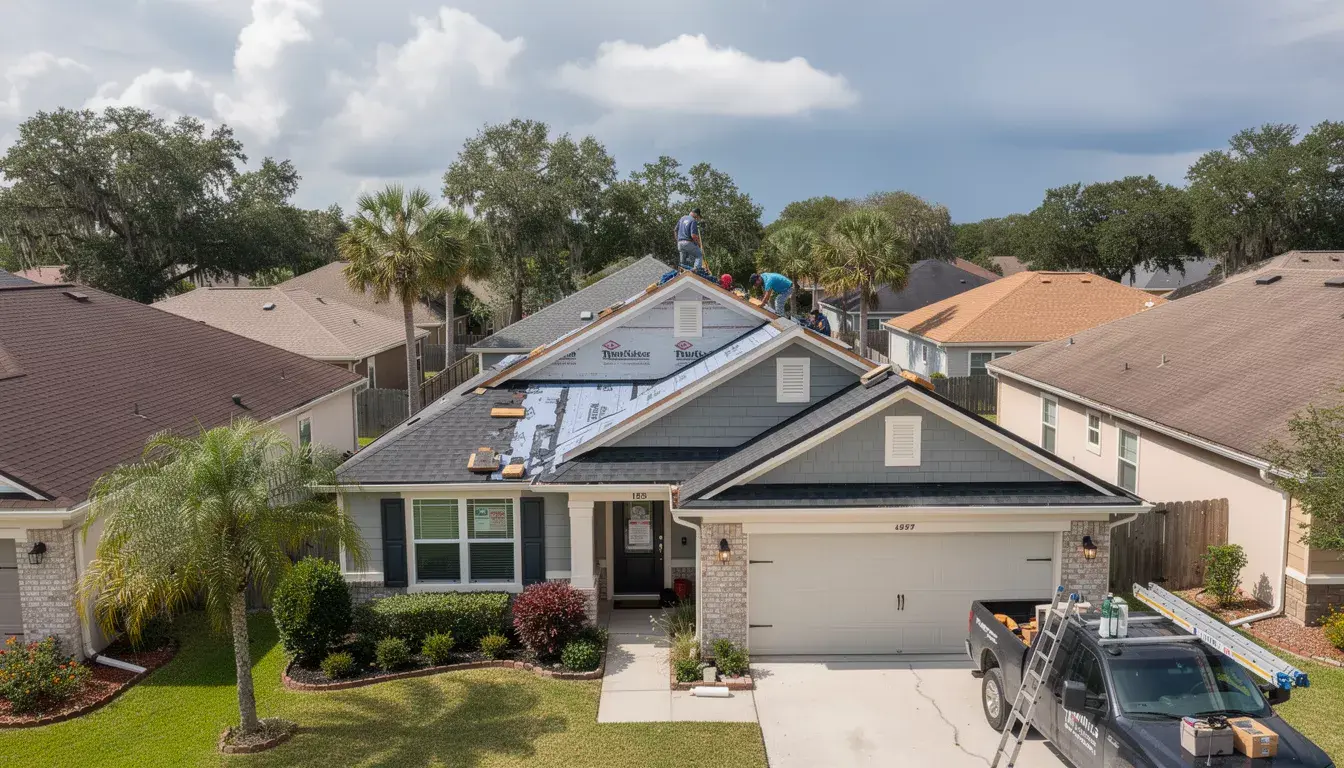
After a hurricane damages part of your Jacksonville roof, you call for repairs. The contractor inspects your home and delivers unexpected news. The entire roof needs replacing. You’re confused. The damage doesn’t look that severe. This situation often stems from the Florida 25% roof replacement rule, a building code regulation that catches many homeowners off guard.
This rule has protected Florida homes from hurricane damage for years, but recent legislative changes have created new exceptions. Understanding how this regulation applies to your home can save you from insurance disputes and help you make informed decisions about your roofing needs.
What Is the Florida 25% Roof Replacement Rule?
The Florida Building Code Section 706.1.1 established a threshold for roof repairs. Historically, if more than 25% of your roof sustained damage within a 12-month period, you were required to replace the entire roofing system to meet current building code standards. The damaged area percentage determined the scope of work, not the condition of the undamaged portions.
Think of it this way. Damage to three sections of an eight-section roof crosses the threshold. At that point, partial repairs aren’t allowed. The code mandates getting a complete roof replaced to bring the entire system up to modern hurricane resistance standards.
Florida’s extreme weather conditions demand roofs that can withstand hurricane-force winds and torrential rain. The 25 percent rule roofing regulation prevents patchwork repairs on older roofs that create weak points during the next storm.
How Senate Bill 4-D Changed the Florida Building Code Roof Replacement Requirements
On May 26, 2022, Senate Bill 4-D created a significant exception to this long-standing regulation. The new law introduced a critical dividing line based on construction dates, fundamentally changing how the rule applies to many Jacksonville homes.
The March 1, 2009 Threshold
This date marks when the 2007 Florida Building Code took effect, establishing modern standards for hurricane resistance. Your roof’s relationship to this date determines which rules apply.
Roofs built or replaced after March 1, 2009
If your roof complies with the 2007 code or later versions, you can repair just the damaged portion, even when damage exceeds 25% of the total area. Only the repaired section must meet current code requirements.
Roofs built before March 1, 2009
The original rule still applies. Damage exceeding 25% of the total surface area triggers a complete replacement requirement, unless you’ve had a code-compliant replacement since 2009.
Understanding Roof Sections vs. Complete Systems
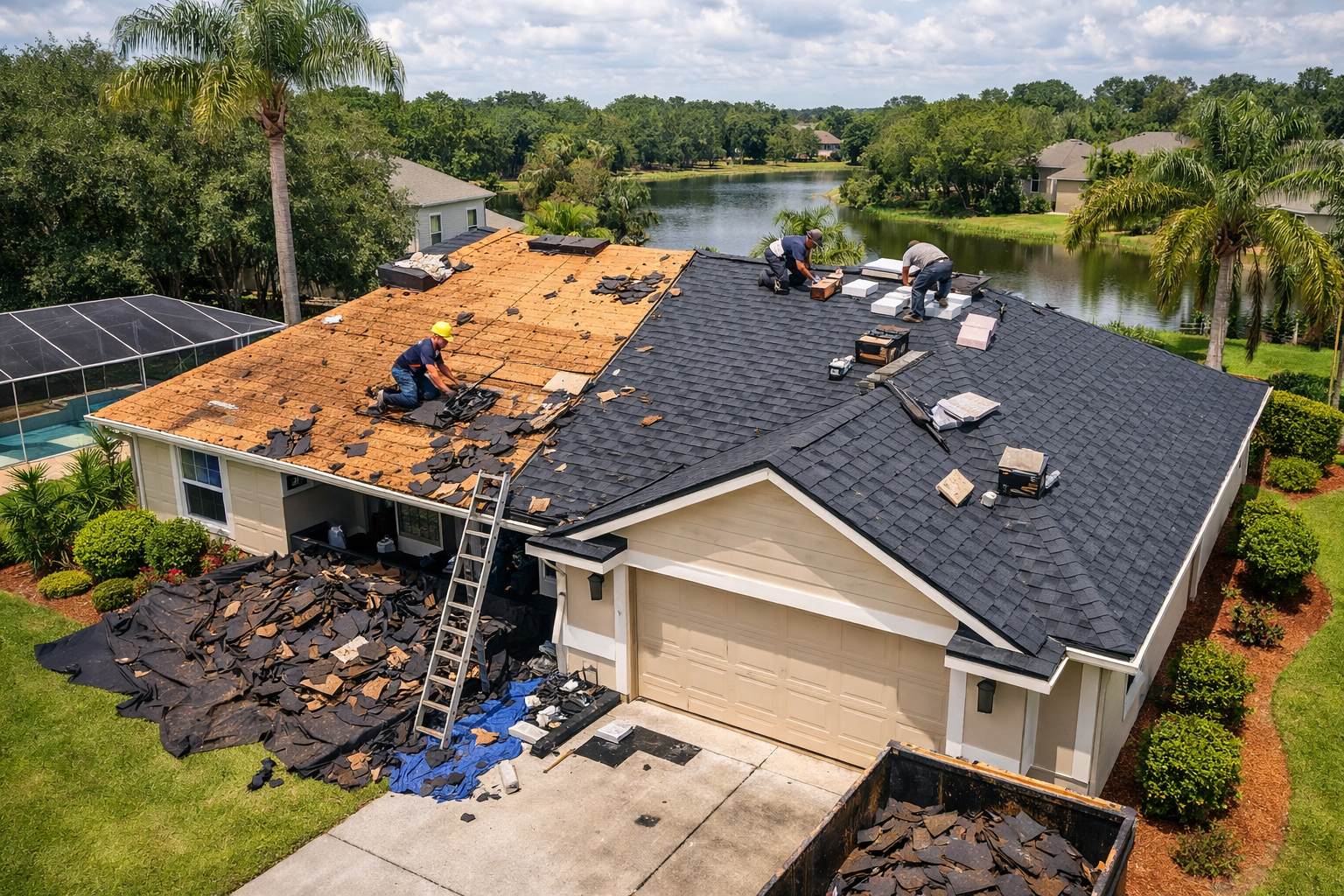
The Florida building code roof replacement rule hinges on how roof sections are defined. A roof section is separated by existing expansion joints, parapet walls, flashing excluding valleys, elevation differences excluding hips and ridges, roof type, or legal description.
Both slopes of a typical gable roof count as one section. Changes in roofing material or elevation create separate sections. This distinction matters because the 25% threshold applies to each section independently. Damage concentrated in one section might require replacing that entire section without touching the rest of your roof.
When Is a Full Roof Replacement Required in Florida?
Three scenarios typically trigger complete replacement under current regulations.
Pre-2009 roofs with extensive damage
Homes with original roofing systems installed before March 1, 2009, must follow the traditional rule. Storm damage affecting more than a quarter of the roof area requires total replacement.
Multiple repair attempts
The code tracks cumulative repairs within a 12-month period. Multiple small repairs to different areas that together exceed 25% trigger the replacement requirement.
Structural integrity concerns
Even when the rule doesn’t apply, scheduling a thorough inspection might reveal underlying issues that make replacement the safer, more cost-effective option.
How the Roof Repair vs Replacement Florida Law Impacts Your Insurance Claim
Insurance companies in Florida handle roof damage claims differently based on this regulation. Understanding the roof repair vs replacement Florida law helps you advocate for fair coverage.
Many insurers initially offer to cover minor repairs, even when damage clearly exceeds the threshold. They might claim your roof qualifies for the post-2009 exemption without proper verification. Others argue that storm damage is wear and tear, avoiding responsibility for a complete replacement when code requires it.
Insurance Claim Roof Replacement Florida Details
Jacksonville homeowners navigating the insurance claims process benefit from documentation. Professional inspections provide evidence of damage extent, your roof’s age, and code compliance status. This information supports your claim when negotiating with insurance adjusters.
Recent changes also affect coverage for older roofs. Insurance companies cannot deny coverage or refuse policy renewal solely because your roof is less than 15 years old. For roofs 15 years or older, insurers must allow inspections confirming at least five years of remaining useful life before requiring replacement.
2025 Jacksonville Roofing Code and Building Standards
Florida’s roofing landscape continues evolving. The 8th edition of the Florida Building Code, implemented in December 2023, introduced enhanced requirements that affect new installations and replacements.
Current standards now mandate dual-layer underlayment for metal, asphalt shingle, slate, and mineral-surfaced roll roofing. Enhanced nail penetration requirements and improved materials standards for wind and impact resistance raise the bar. These updates mean replacement projects bring your home up to the strongest building standards Florida has ever implemented.
Insurance law changes in 2025 require more detailed documentation for claims, making professional inspections and comprehensive photographs crucial evidence.
Steps to Take After Storm Damage
Document immediately
Take detailed photos and videos as soon as safe access is possible.
Schedule professional assessment
Get expert evaluation of damage extent and how Jacksonville roofing code applies to your situation.
File promptly
Submit your insurance claim without delay. Timing matters for proving when damage occurred.
Keep records
Save copies of all communications with your insurance company, including emails, letters, and claim forms.
Why Local Experience Matters with the Florida 25% Roof Replacement Rule
Building departments across Northeast Florida sometimes interpret the 25 percent rule roofing regulation differently. A contractor experienced in your area understands these nuances and can guide you through the permitting process.
Working with a local roofing company helps you avoid code violations and insurance disputes. They can determine if your roof qualifies for the post-2009 exemption, calculate damage percentages accurately, and provide documentation that satisfies both building inspectors and insurance adjusters.
Local contractors stay current on Florida building code changes and insurance claim requirements. They can assess damage extent and explain your options clearly, so you can decide between repairing sections or replacing everything based on what makes sense for your home.
Understanding the Florida 25% roof replacement rule protects you from surprises during an already stressful situation. Knowing your rights and obligations under Florida law helps you work confidently with contractors and insurance companies to restore your roof.
About the author
The Cache Roofing Team writes from field experience on Northeast Florida roofs. Cache Roofing is a Florida certified roofing contractor (license #CCC1336213) based in Jacksonville. Learn more about the company.