
Materials
Metal or Tile? How to Choose the Right Commercial Roof in Florida
By Cache Roofing Team · Published
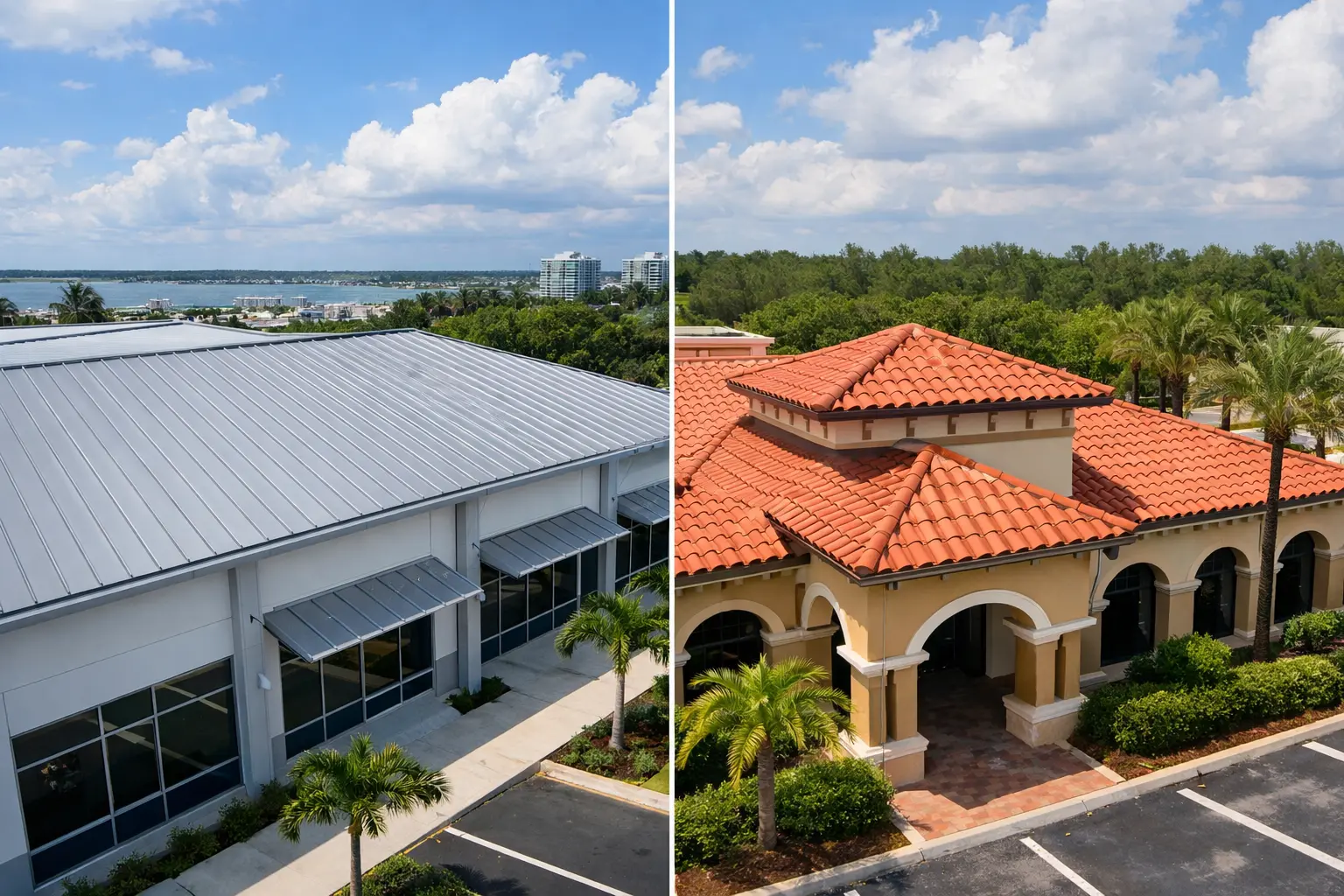
If you’re replacing a commercial roof in Florida, you’ve probably narrowed it down to two options: metal or tile. Both handle our climate well. Both last decades. But they’re not interchangeable. The right choice depends on your building, your budget, and how you plan to use the property long-term.
Here’s how they compare so you can make a decision that makes sense for your situation.
What to Expect From Metal and Tile Roof Lifespans
Both materials outlast most other commercial roofing options in Florida.
Metal Roofing Built for the Long Haul
Metal roofing typically lasts 40-50 years with minimal maintenance. Standing seam systems perform especially well because the raised seams keep fasteners protected from weather exposure. For warehouses, retail buildings, and office parks across North Florida, metal roofing installation has become a popular choice for owners who want longevity without heavy upkeep.
Clay Tile Delivers Serious Longevity
Tile roofing can last 50 years or longer — sometimes 75+ years for high-quality clay tile. The tiles themselves are incredibly durable, though the underlayment beneath them will need replacement sooner (usually around the 20-25 year mark). Many commercial tile roofing projects in Jacksonville involve properties that want both durability and a distinctive architectural look.
So, Which One Wins?
Tile has a slight edge on raw lifespan, but metal requires less maintenance over time.
Wind Ratings and Real-World Storm Performance
Florida’s wind codes don’t play favorites. Both metal and tile roofing systems can be installed to meet the 130-150 mph wind ratings required in most of our area.
Why Standing Seam Systems Lock Out the Wind
Metal roofing resists wind uplift well when properly fastened. Standing seam panels interlock, which makes them harder for wind to catch. The main vulnerability is at edges and transitions — that’s where quality installation matters most.
Tile’s Strengths and Weak Spots in Hurricanes
Tile roofing is heavy, which helps it stay put in high winds. But individual tiles can crack or break from flying debris during hurricanes. After major storms, tile roofs often need spot repairs even if the overall system is intact. Commercial roofing contractors who specialize in tile know how to secure tiles properly for our wind zone.
Which One Handles Hurricanes Better?
Both perform well in hurricanes when installed correctly. Metal has fewer post-storm repairs; tile has more weight holding it down.
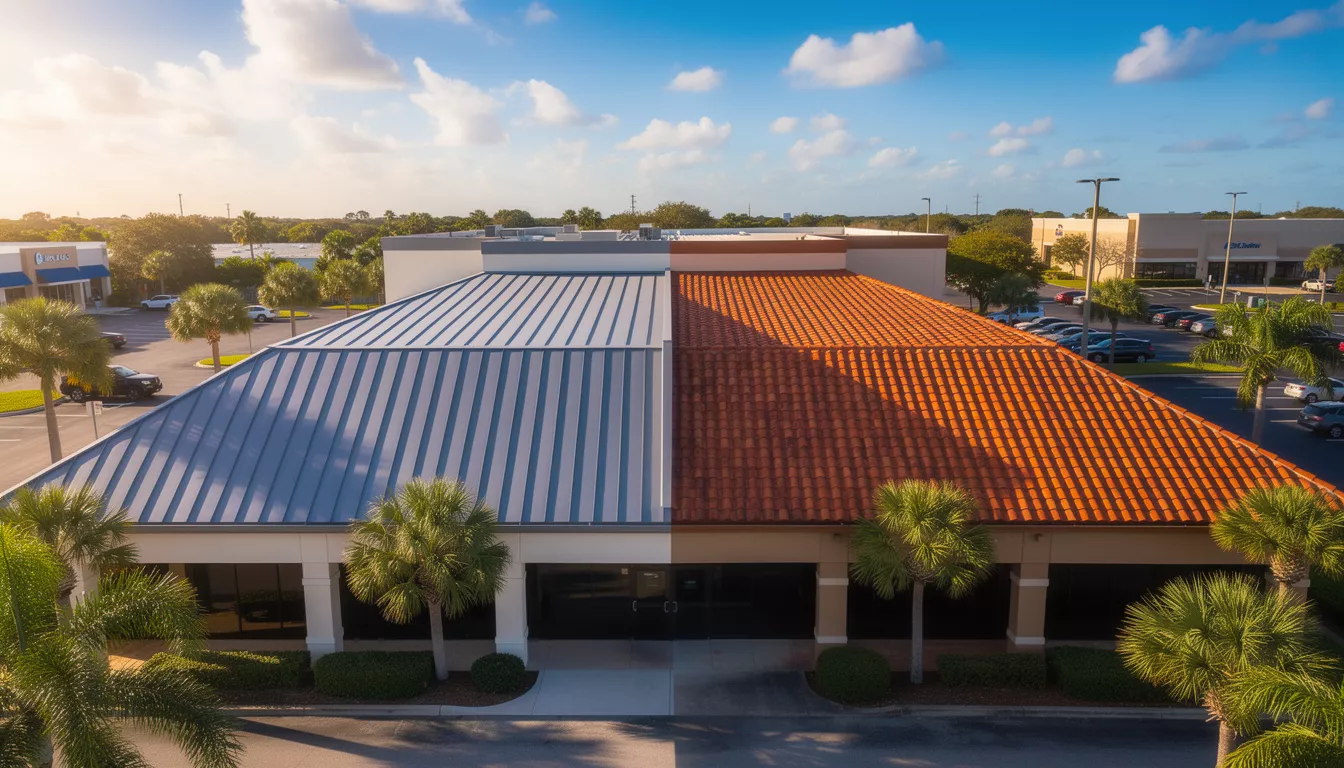
Which Roofing Option Helps Reduce Energy Bills Year-Round
This matters more for commercial buildings than most owners realize, especially in Florida where cooling costs run year-round.
Metal Can Cut Cooling Costs by Up to 25%
Metal roofing reflects solar heat rather than absorbing it. A light-colored or coated metal roof can reduce cooling costs by 10-25% compared to darker materials. For large commercial buildings with significant square footage, that adds up fast.
Tile’s Thermal Mass and the Cooling Effect
Tile roofing has natural thermal mass, which slows heat transfer into the building. The air gap between the tiles and the deck also provides some insulation. Clay and concrete tiles don’t reflect heat as efficiently as metal, but they don’t absorb it as quickly either.
Which Roof Saves More on Cooling?
Metal wins on energy efficiency, especially for larger buildings with high cooling loads.
Comparing the Long-Term Value of Metal vs. Tile Roofs
Let’s be direct, neither option is cheap. But commercial roofing is a long-term investment, and the math changes when you factor in lifespan and maintenance.
Metal Roofing Keeps Costs Predictable
Metal roofing generally costs less upfront than tile. Installation is faster because panels cover more area than individual tiles. Maintenance costs stay low over the roof’s life since there are fewer components that can fail or need replacement.
What to Budget for With Tile
Tile roofing has higher upfront costs due to material weight (which sometimes requires structural reinforcement) and labor-intensive installation. However, the longer lifespan can offset this if you plan to own the building for decades. Budget for underlayment replacement around year 20-25.
Choosing Based on Your Timeline
Metal has lower total cost of ownership for most commercial buildings. Tile makes sense when aesthetics matter and you’re in it for the long haul.
Matching a Commercial Roof to Your Property’s Style
Sometimes the decision comes down to what the building needs to look like.
Metal Works for Warehouses, Retail, and Modern Design
Metal roofing works well for modern commercial architecture, industrial buildings, warehouses, and retail. Standing seam profiles look clean and professional. Color options are extensive. But metal may not fit every aesthetic — it won’t look right on a Spanish-revival hotel or Mediterranean-style retail center.
The Go-To Choice for Hotels, Resorts, and Upscale Retail
Tile roofing dominates in hospitality, multi-family residential, and any commercial property going for a traditional Florida or coastal look. Hotels, resorts, and upscale retail centers often choose tile specifically for curb appeal. Concrete and clay tiles come in profiles that range from flat to barrel-shaped, with dozens of color options.
Choosing Based on Architecture
Match the material to the building’s style and market positioning.
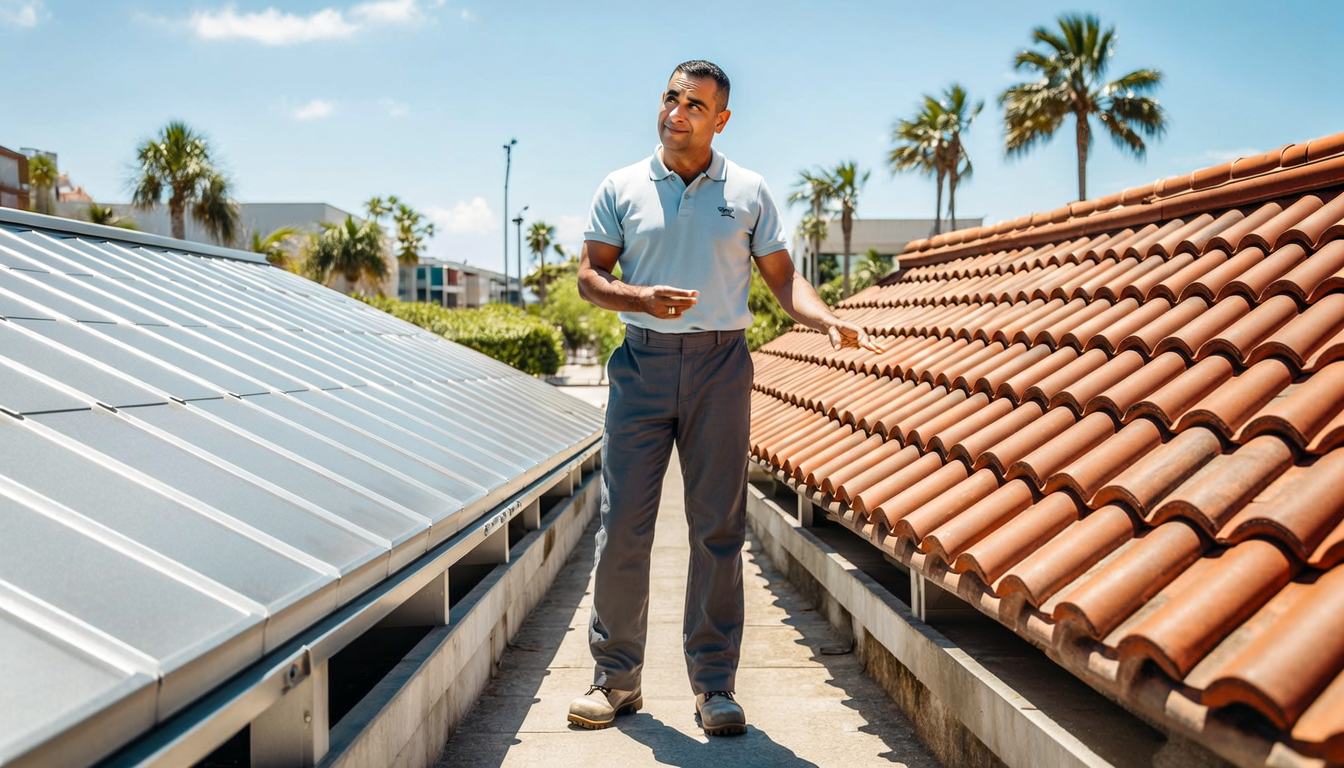
What Ongoing Maintenance Looks Like for Each Roofing Type
Minimal Maintenance, Maximum Lifespan
Metal roofing needs very little. Periodic inspections to check fasteners, seams, and flashing. Occasional cleaning. That’s about it. Most commercial metal roofing systems in Florida go years between service calls.
More Pieces Mean More to Watch
Tile roofing requires more attention. Walking on tile incorrectly cracks tiles. Debris buildup in valleys needs clearing. And because tiles are individual pieces, there’s always potential for one to crack, shift, or come loose. Tile roofs need regular inspection to catch small problems before they become leaks.
What This Means for Busy Property Owners
Metal is lower maintenance. If you’re a hands-off property owner, that matters.
What Protects Your Building When the Roof Alone Isn’t Enough
Both systems rely on proper waterproofing beneath the finish material, but it’s especially critical for tile.
The Waterproofing Layer That Makes or Breaks Tiles
With tile roofing, the tiles themselves aren’t waterproof. They shed most water, but the real protection comes from the underlayment. That’s why underlayment quality and installation matter so much. For commercial buildings with rooftop decks or balconies, adding waterproofing systems for rooftop decks provides extra protection in high-traffic areas.
How Standing Seam Panels Lock Out Water
Metal roofing creates a more continuous water barrier, especially standing seam systems where panels interlock without exposed fasteners.
How to Know Which Commercial Roof Fits Your Property
Consider metal if:
- You want lower long-term maintenance
- Energy efficiency is a priority
- The building is a warehouse, office, retail, or industrial property
- You’re budget-conscious but want quality
Consider tile if:
- Aesthetics and curb appeal drive value (hotels, multi-family, upscale retail)
- You want the longest possible lifespan
- The building’s architecture calls for a traditional look
- You’re willing to invest more upfront for the look you want
Still not sure? The best way to decide is to schedule a roof inspection and talk through your options with someone who installs both systems. A good commercial roofing contractor will help you weigh the tradeoffs based on your specific building and goals, not push you toward whatever’s easiest for them.
About the author
The Cache Roofing Team writes from field experience on Northeast Florida roofs. Cache Roofing is a Florida certified roofing contractor (license #CCC1336213) based in Jacksonville. Learn more about the company.