
Roof Costs
The True Cost of Ignoring Minor Roof Leaks in Florida
By Cache Roofing Team · Published · Updated
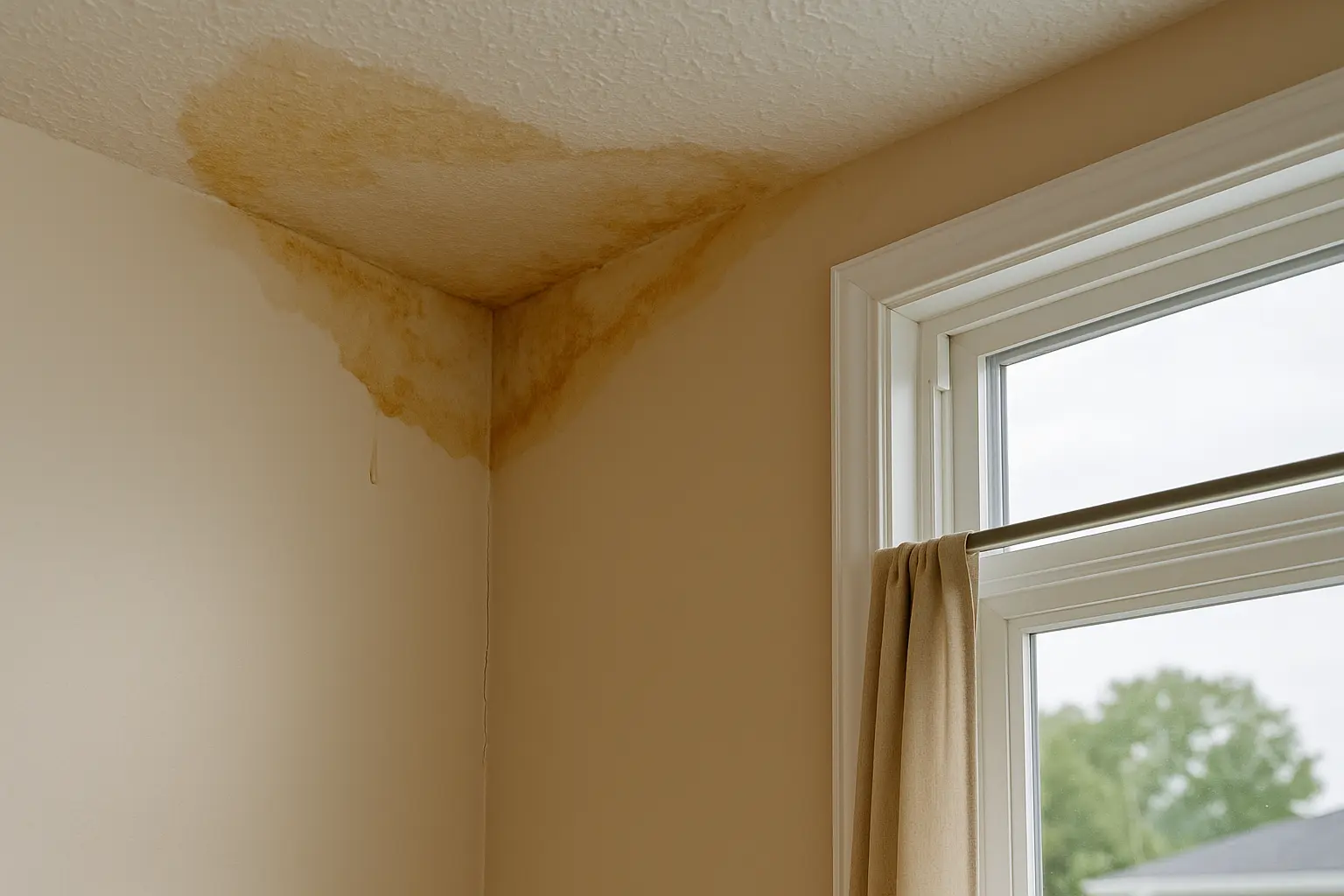
It’s easy to overlook a ceiling stain or small drip when the rest of your roof seems fine. Maybe it only happens during heavy rain, or maybe it’s just one corner of the house. But even a minor roof leak in Florida can lead to bigger problems than most homeowners expect.
Letting it sit, even for a few weeks, starts a chain of damage you may not see right away. And by the time it becomes visible, the repairs may be more than just surface-level.
Small Roof Leaks Don’t Stay Small for Long
Is a Small Roof Leak an Emergency?
Not in the traditional sense, but calling it harmless would be a mistake. What may seem like a minor issue is often the last symptom of a much deeper one. Water travels through layers of your roof before you ever see it indoors. By then, it’s already passed through insulation, wood, and other materials that weren’t designed to stay wet.
Why That Drip Could Cost You More Later
One leak can trigger a range of problems. These aren’t immediate disasters, but they grow quietly over time. Understanding what damage can a leaking roof cause gives better context for how serious this becomes once moisture takes hold inside your attic or walls.
What Happens Behind the Ceiling Stain
Damaged Insulation That Won’t Dry Out
Water doesn’t just sit on the surface. It soaks into your attic insulation first. In Florida, where humidity stays high year-round, damp insulation doesn’t dry easily. It collapses, loses its ability to block heat, and starts costing more on your energy bills. Your air conditioning runs longer, but your home still feels less comfortable.
Structural Wood That Softens Over Time
The next stop for moisture is the wood structure itself. Ceiling joists, roof decking, and rafters absorb water slowly. Eventually, this leads to rot and weakening. Repairs that could have been handled early with a patch may now involve cutting out and replacing entire sections of your roof system. That kind of work takes time, costs more, and disrupts daily life.
You can often avoid that by addressing the source of the leak early, before it has a chance to spread.
Interior Surfaces That Can’t Handle Moisture
By the time you notice water indoors, your drywall may already be saturated. Paint peels or bubbles, and ceiling materials can start to sag. Sometimes, sections of drywall need to be removed entirely to get rid of hidden moisture or mold.
How Roof Leaks Turn Into Health Risks
Is a Leaking Roof a Health Hazard?
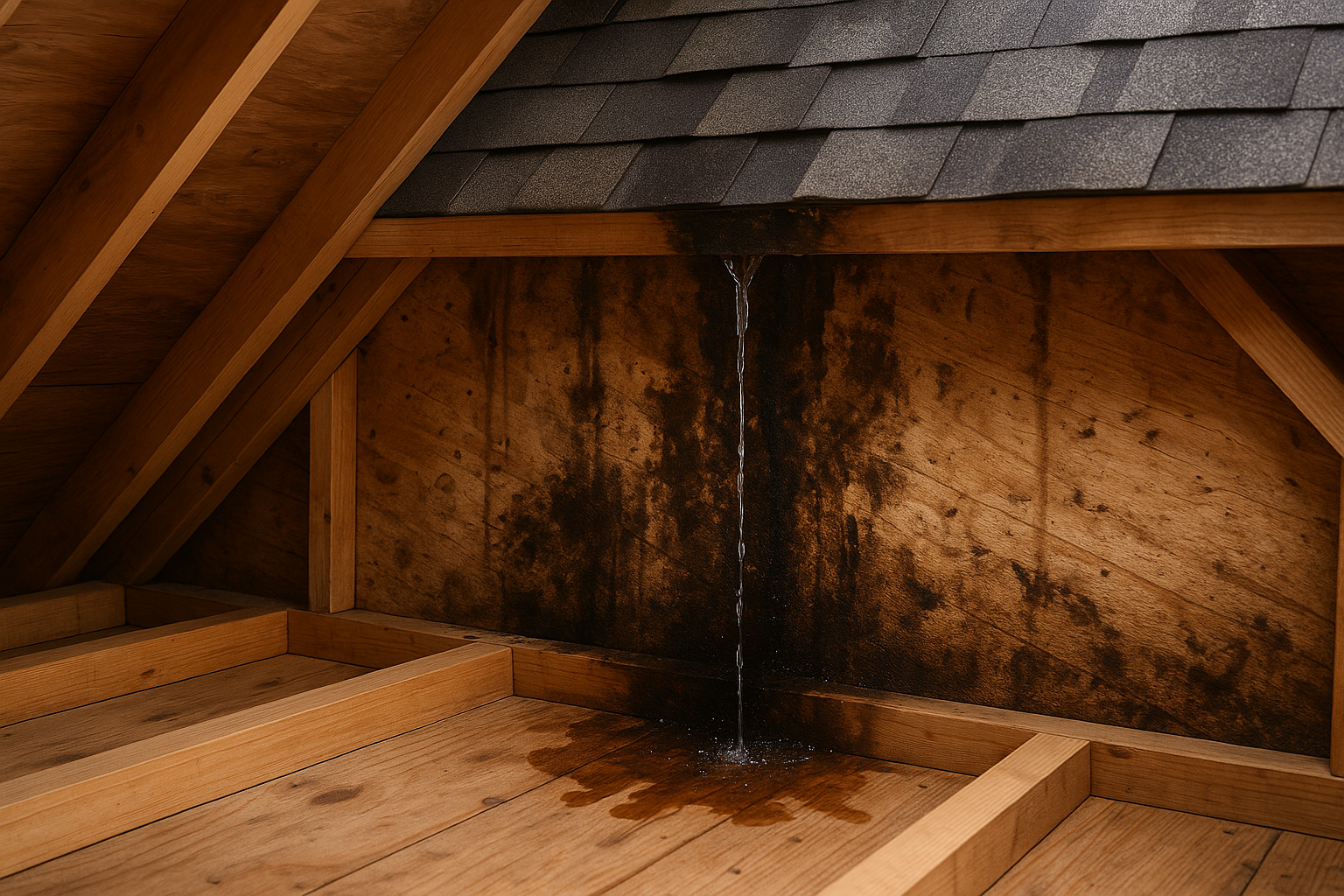
In Florida homes, yes. The combination of a steady drip and high moisture in the air can set the stage for hidden growth inside the home. Attics are especially vulnerable. A small leak can lead to mold in attic areas before anyone realizes it’s there.
Can a Roof Leak Cause Mold?
Absolutely. It only takes moisture, darkness, and time. Once mold forms, it doesn’t stay contained. Spores spread through your home’s air system and can trigger breathing issues, allergies, or long-term irritation. This becomes a larger problem when mold from the attic reaches the HVAC system and enters the air in every room.
This is one of the most overlooked dangers of roof leaks. By the time mold becomes visible, the cleanup process is already more complex and expensive.
What’s Behind Most Roof Leaks?
What Is the Most Common Cause of Roof Leaks?
It’s not always a missing shingle or major storm damage. The most common causes are small details that go unnoticed. Flashing around a vent, a loose nail, or a worn boot around a plumbing pipe can all let water in. On tile roofs, a single cracked or slipped tile can expose the underlayment and create the same problem. These issues are easy to overlook day-to-day, but they’re often the start of something much bigger.
When ignored, even one small leak from a flashing defect can lead to long-term wood damage or mold growth. In a state like Florida, with constant sun, heat, and rain, those small weaknesses can become expensive faster than you think.
Water Leaks and Humidity Make a Bad Match
Why Local Homes Are More at Risk
In Florida, high humidity acts like a force multiplier. Once water enters the attic or wall, it doesn’t evaporate quickly. That trapped moisture sits inside, feeding mold and weakening materials.
Homeowners often don’t realize how water leak humidity impacts their insulation and framing. The moisture stays active long after the storm has passed. Mold thrives in this kind of environment, and so do pests, rust, and wood deterioration.
Why Waiting Doesn’t Work
Putting a bucket under a drip or waiting for a drier season may seem like a temporary solution, but it usually leads to more damage in the long run. Repairs cost more, take longer, and affect more areas when the problem spreads.
If you’re already noticing signs of a leak, the next best move is to have the issue checked out. Not for the sake of the stain, but to stop what’s happening behind it.
What This All Means for Florida Homeowners
A roof leak doesn’t need to flood a room to be serious. Most of the damage happens before you see the first sign. Ignoring it puts your structure, air quality, and energy costs at risk, especially in Florida’s climate, where moisture rarely has a chance to dry out on its own.
Understanding the dangers of roof leaks helps put that “small” problem into better perspective. From insulation issues to health hazards and mold in attic spaces, even a small leak has a large impact over time.
If you’re researching how to handle a leak, take time to address the source directly, not just the symptoms. It’s the clearest way to avoid future costs and protect the home you live in every day.
About the author
The Cache Roofing Team writes from field experience on Northeast Florida roofs. Cache Roofing is a Florida certified roofing contractor (license #CCC1336213) based in Jacksonville. Learn more about the company.